A home’s appearance comes from the relationship between its architecture and the outdoor spaces surrounding it. A roof color can change how the siding looks, while an overgrown tree can hide an otherwise attractive entrance. The most effective exterior improvements account for those connections, creating a property that feels balanced from the street and welcoming up close.
Choosing upgrades starts with identifying what draws attention for the wrong reasons. Faded finishes, uneven pavement, oversized shrubs, or an empty backyard may each call for a different solution. A thoughtful plan gives every improvement a purpose and allows major construction to happen before delicate finishing work. These eleven upgrades offer practical ways to refresh a home’s appearance while making outdoor areas more enjoyable.
1. Refresh the Roof’s Color and Profile
Because the roof occupies a substantial part of many homes’ visible exterior, its color and texture deserve careful consideration. Well-planned roof replacements can give an older house a more cohesive appearance, especially when the existing surface looks patchy or clashes with the walls. Material choices should complement permanent features such as brick, stone, and the home’s overall shape.
A roof sample viewed indoors may look different across a large surface in daylight. Comparing options beside the home’s exterior materials helps reveal whether a shade feels too warm, too cool, or too prominent. The roof does not need to match every finish exactly; a related undertone can connect the different surfaces without making the entire house look flat.
Homeowners considering a metal surface can compare how different panel styles relate to the architecture. When evaluating metal roofing companies, examples of completed homes with similar rooflines are useful selection criteria. A narrow standing-seam profile creates a different visual rhythm from a more pronounced pattern, and the choice should suit the house rather than overwhelm its smaller details.
2. Give Exterior Walls a Cohesive Finish
Wall finishes establish much of a home’s character, whether the goal is a traditional cottage appearance or a cleaner contemporary style. New siding can introduce texture, adjust the apparent proportions of the building, and connect additions with the original structure. Choosing a limited combination of materials usually makes those changes easier to read from the street.
The transitions between surfaces matter as much as the main wall material. Homeowners comparing siding companies should examine how their completed projects handle corners, window surrounds, and the junction between different profiles. Consistent detailing helps a house feel intentionally designed, particularly when one elevation combines lap siding with an accent area of vertical boards or shingles.
Accent materials work best when they reinforce an architectural feature. A front-facing gable or recessed entrance can support a different texture, while scattering accents across unrelated walls may compete with the home’s shape. Repeating trim widths and keeping color relationships consistent allows each surface to contribute to the same overall appearance, even when the materials are different.
3. Update the Exterior Color Palette
An exterior paint project can shift the mood of a home without changing its basic structure. Experienced painting companies can help homeowners assess how body, trim, and accent colors work alongside surfaces that will remain. Brick, roofing, stone steps, and driveway materials all belong in that discussion because they influence whether a proposed palette feels harmonious.
Color samples need room to show their character. A pale shade may appear brighter across an entire wall, while a dark accent can become visually heavy when repeated on every detail. Professional sample applications viewed at different times of day provide a clearer basis for selection. A restrained palette also gives the front door or another focal point space to stand out.
Project order protects the finished appearance. If roof replacements are already part of the renovation plan, completing them before the final exterior paint work helps avoid damage to newly coated trim and walls. Repairing deteriorated surfaces before painting is equally important, since a fresh color cannot disguise poor preparation or create a clean finish over unstable material.
4. Redesign the Driveway’s Shape and Edges
A driveway often forms a broad foreground beneath the house, making its shape and condition especially noticeable. A more deliberate layout can improve the view by organizing parking areas, defining the approach, and creating room for planting along the edges. Even a straightforward design benefits from a clear relationship with the garage, walkway, and front entrance.
A local paving contractor can evaluate how the proposed driveway fits the property’s grades and existing access. That assessment supports decisions about width, curves, and the connection to nearby surfaces. The appearance improves when those elements feel proportionate to the home, with enough space for ordinary vehicle use and clearly defined boundaries between pavement and adjacent lawn.
Edges give the finished driveway a sense of order. Through landscaping services, a planting strip can soften a large paved area and connect it with the surrounding yard. A compatible border can echo the front steps or a nearby path. Garage doors, parked vehicles, and pedestrian routes also belong in the composition, so the design accommodates how people actually arrive and move through the property.
5. Restore the Appearance of Existing Asphalt
Not every driveway needs a completely new layout to look better. Where asphalt remains suitable for maintenance, addressing its surface condition can make the approach appear more consistent. The first step is a professional assessment that distinguishes cosmetic weathering from problems requiring repair, allowing the homeowner to choose work that fits the pavement’s actual condition.
For an appropriate asphalt surface, sealcoating services can restore a darker, more uniform appearance that creates a crisp backdrop for planting and exterior finishes. Preparation remains part of the result: a coating should follow the necessary assessment and repairs. Treating the project as surface maintenance keeps expectations realistic and avoids confusing a refreshed finish with correction of underlying pavement problems.
Visible depressions, loose areas, or persistent pooling call for closer attention before cosmetic work begins. A local paving contractor can determine whether repairs or more extensive changes are needed to support a finished surface. Resolving those conditions first helps the driveway’s appearance feel complete, with a maintained entrance rather than a fresh coating over an unresolved problem.
6. Shape Mature Trees Around the Home
Mature trees can frame a house beautifully, but their relationship with the building changes as they grow. Thoughtful tree services can open selected views of the entrance and restore balance where branches obscure architectural features. The aim is to retain the property’s established character while making the home easier to see from the street and its main approach.
Pruning decisions should account for the tree’s health and natural form. Removing too much growth simply to reveal a wall can leave an awkward outline that detracts from the property. A qualified arborist can assess which changes are appropriate, considering the species, condition, and surrounding space. Some settings benefit from modest adjustments rather than a dramatic change to the canopy.
A hardscape service can help plan paths and bed boundaries around retained trees, with an arborist advising on root protection. The planting beneath the canopy may also need reconsideration after pruning changes the available light. Shade-tolerant plants, open ground, and carefully positioned shrubs can connect the tree with the rest of the yard, giving the area a deliberate composition instead of an overgrown appearance.
7. Rebuild Planting Beds With Clear Proportions
Well-arranged planting beds create depth and help a home feel settled within its lot. Professional landscaping services can organize plant heights, spacing, and seasonal interest around the building’s scale. Lower growth near windows preserves visibility, while taller planting placed thoughtfully can soften broad walls without concealing the features that give the house its character.
Repeating selected plants often creates a calmer appearance than filling every available space with a different variety. The design can still include seasonal color, but a consistent base of foliage gives the yard continuity throughout the year. Mature size matters here: plants need enough room to develop without turning a neatly arranged bed into a crowded barrier beside the house.
Planting and circulation should be planned together, with bed edges following the shape of nearby walkways. Broad, deliberate curves are often easier to appreciate from a distance than many tiny planting pockets. Repeating those lines elsewhere can tie separate garden areas together. The resulting yard gives visitors a clear route while allowing greenery to soften the surrounding built surfaces.
8. Create a Patio That Fits the Property
A patio changes the backyard’s appearance by giving outdoor activity a defined setting. Working with a hardscape service allows homeowners to consider the size, surface pattern, and placement alongside the house. A space scaled for the intended furniture arrangement looks more purposeful than a leftover paved area, especially when doors and garden views help determine its position.
Material selection can extend the home’s visual character outdoors without copying every finish. Warm masonry may relate to brick accents, while a simpler surface can complement contemporary walls and large windows. Furniture placement should leave comfortable routes between the house, seating, and surrounding yard. Those open paths contribute to the appearance by keeping the space from feeling crowded or improvised.
Future construction can affect even a beautifully planned patio. When a pool is part of the broader design, involving local swimming pool builders before finalizing adjacent paving helps establish access, equipment locations, and the relationship between water and seating areas. Early coordination reduces the likelihood that finished work will need alteration to accommodate a later phase of the backyard project.
9. Add Lighting That Reveals Architectural Details
Exterior lighting gives a home a different presence after sunset. Fixtures near the entrance can make the approach welcoming, while carefully placed light can reveal wall textures and selected garden features. The most appealing arrangement usually has a clear focus, allowing some areas to remain quiet instead of illuminating every surface with equal intensity.
Trees deserve special attention because their branching patterns affect how light travels. Coordinating fixture placement with tree services helps lighting plans reflect the canopy that will remain after scheduled pruning. A subtle wash through selected branches can highlight their form, while glare directed toward windows or neighboring properties can detract from the evening appearance. Placement matters more than simply adding brightness.
Light also changes the way exterior colors are perceived. When choosing finishes with painting companies, homeowners can consider how planned fixtures will illuminate the walls and trim at night. Viewing samples under the intended lighting helps connect daytime and evening decisions. Consistent fixture styles and compatible light tones give the entrance, paths, and garden a more unified appearance.
10. Make a Pool Part of the Backyard Composition
A swimming pool can become the visual center of a backyard when its placement relates to the home and surrounding outdoor spaces. Homeowners working with local swimming pool builders should consider views from frequently used rooms as well as from the patio. The pool’s shape and orientation influence how the entire yard feels, even when nobody is swimming.
The surrounding details determine whether the pool feels integrated into the property. Space for seating, circulation, required barriers, and planting belongs in the initial design rather than being squeezed in afterward. Equipment placement also affects the view. A balanced composition allows the water to remain a focal point while supporting everyday use and leaving appropriate space for other backyard activities.
Construction sequencing extends beyond the backyard itself. If equipment and material deliveries will use the driveway, sealcoating services are better scheduled after that heavy traffic has ended, subject to the pavement professional’s recommendations. Protecting finished surfaces and preserving construction access helps the completed property look cohesive. The last phase can then focus on the visible details that connect the project with its surroundings.
11. Give the Front Entrance a Stronger Identity
The entrance is the place where a visitor experiences the exterior at close range. Door color, trim proportions, house numbers, and porch details can give it a stronger identity without competing with the whole facade. When new wall finishes are planned, siding companies can coordinate the treatment around the doorway so the entrance feels integrated with the surrounding architecture.
A covered porch introduces another material relationship to consider. For homeowners discussing a porch roof with metal roofing companies, compatibility with the main roof and the scale of the entrance should guide the selection. Panel spacing, color, and visible edge details all influence the result. A smaller roof deserves the same attention to proportion as the larger surfaces above it.
Finishing touches work best when they share a clear visual direction. Door hardware, address numbers, and light fixtures can relate through shape or finish, while planters add softness without obstructing the approach. The entry does not need a large collection of accessories. A few well-chosen elements can make the doorway feel inviting and give the entire house a more complete appearance.
The most successful exterior updates reinforce one another. A roof color relates to the walls, planting frames the architecture, and paved areas connect the home with the spaces people use outdoors. Viewing the property as a whole helps homeowners choose improvements that make sense together, whether the work happens in one project or develops gradually over several seasons.
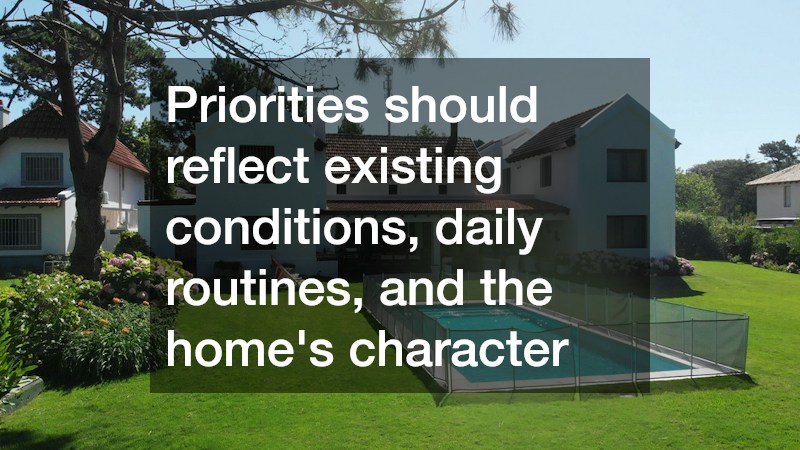
Priorities should reflect existing conditions, daily routines, and the home’s character. Major construction comes first, followed by finishes and planting that benefit from a settled site. With thoughtful proportions and a consistent visual direction, these eleven upgrades can transform the appearance of a home while making its entrance, yard, and outdoor gathering areas feel more welcoming.