Owning residential real estate is about balancing capital preservation with operating expenditure. Many property owners address maintenance reactively, fixing breakdowns, leaks, and wear only when systems fail, leading to financial inefficiency. Emergency service costs, water damage, premature equipment failure, and increased utility bills drain household net worth. Viewing real estate as a high-performance asset changes this. Strategic repairs and upgrades decrease monthly costs and prevent costly emergency repairs. Investing in building resilience, thermal resistance, fluid control, and mechanical efficiency offers better returns than conventional equities or bonds. Savings from reduced utility waste or avoided disasters add to home equity. Long-term financial preservation requires more than cosmetic updates like quartz counters or trendy paint. Real value comes from improvements in thermodynamics, mechanical efficiency, and moisture defense, transforming liabilities into wealth retention.
Sealing Ceiling Penetrations and Boosting R-Value to Modern Climate Standards
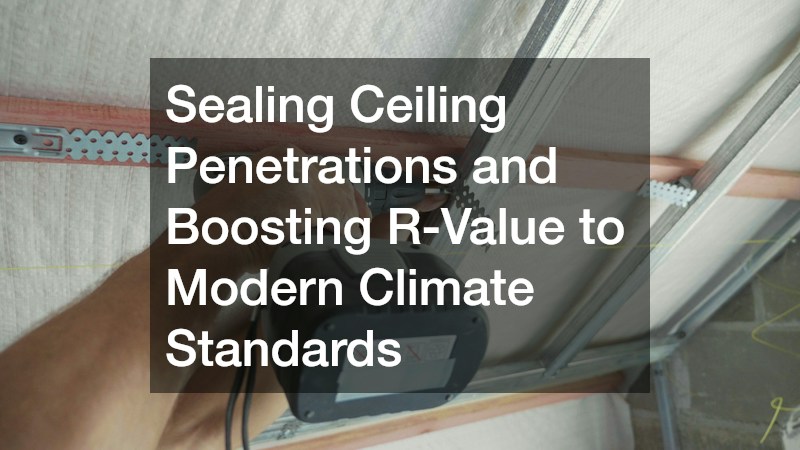
The upper boundary of any residence represents its most vulnerable thermodynamic plane. Conditioned in door air naturally rises through convective buoyancy, generating persistent upward pressure against ceiling surfaces and upper floor assemblies. This phenomenon, known as the stack effect, drives conditioned indoor air through unsealed structural junctions, wiring chases, recessed lighting fixtures, and plumbing vent conduits. During summer, this convective dynamic reverses in direction: an unconditioned roof cavity reaching 130 degrees Fahrenheit radiates intense thermal energy downward, overwhelming cooling systems.
Addressing this thermal bypass requires a dual-stage execution strategy that goes far beyond simply rolling out standard fiberglass batts. Homeowners frequently make the mistake of laying fresh insulation over porous ceiling surfaces without addressing microscopic airflow leaks:
- Comprehensive Air Barrier Sealing: Before adding loose fill or blankets, every ceiling penetration, partition top plate, and wire penetration must be sealed using polyurethane expanding foam and fire-rated mastic. Halting convective airflow through hidden chases prevents moisture from migrating into structural timbers.
- Achieving Modern Depth Standards: Modern building standards call for thermal resistance ratings between R-49 and R-60 across temperate and colder zones. This translates to sixteen to twenty inches of dense-pack cellulose or virgin fiberglass, far exceeding the inadequate six-inch layer found in older construction.
- Certified Installation Partnerships: Partnering with an experienced attic insulation company guarantees that hidden convective loops are identified using infrared diagnostics and calibrated pressure gauges. Professional crews also install rigid baffles along exterior eaves to preserve vital soffit airflow and protect roof decking from condensation rot.
Eliminating Threshold Air Leaks with High-Performance Gaskets and Sweeps
While the ceiling plane drives convective air movement, perimeter entryways introduce substantial lateral air infiltration that constantly destabilizes indoor microclimates. An unsealed exterior portal degrades internal comfort and forces constant climate cycling. In fact, an imperceptible one-eighth-inch gap beneath an entryway admits the same volume of drafts as a two-inch hole cut straight through an exterior wall.
Rectifying lateral perimeter leakage is among the highest-return micro-investments available to homeowners, requiring basic hardware and precise execution:
- Upgrading Perimeter Weatherstripping: Standard foam seals deteriorate under repeated physical compression and ultraviolet exposure. Replacing brittle strips with cellular silicone or kerf-mounted bulb seals restores an airtight perimeter compression boundary.
- Adjusting Threshold Sill Screws: Modern aluminum thresholds contain built-in adjustment screws along the center channel. Gradually raising the sill until it makes continuous, uniform contact across the bottom sweep stops drafts without straining lock assemblies.
- Installing Heavy-Duty Bottom Sweeps: Securing a heavy-duty extruded aluminum and neoprene sweep to an exterior door halts incoming drafts and blocks wind-driven precipitation from entering the subfloor framing. Industrial neoprene maintains flexibility through extreme freezes where vinyl cracks.
Applying Spectrally Selective Ceramic Films to High-Exposure Glazing
Standard glass windows represent significant thermal vulnerabilities within the exterior envelope. While double-pane glass provides baseline conductive insulation, untreated float glass remains transparent to shortwave solar radiation. During summer afternoons, unshaded southern and western windows admit heavy infrared energy directly into living zones. This passive solar gain creates severe interior heat pockets, forcing climate equipment to run non-stop during expensive peak electrical tariff periods.
Replacing existing double-pane window units across an entire house requires an exorbitant capital outlay, often taking decades to generate positive financial returns. A far more strategic, high-ROI alternative is the targeted installation of modern solar architectural coatings:
- Advanced Ceramic Surface Treatments: Installing residential window tinting that uses nano-ceramic or spectrally selective technology blocks up to 84 percent of infrared heat while permitting abundant visible light. This avoids the dark, mirrored look of commercial coatings while neutralizing heat influx.
- Preservation of Interior Finishes: Ceramic window films reject 99 percent of destructive ultraviolet wavelengths. This protects hardwood floors, cabinetry, artwork, and upholstery from fading and photochemical degradation, saving thousands in refinishing costs.
- Measurable Energy Reductions: Rejecting intense solar radiant energy lowers room temperatures by five to nine degrees Fahrenheit. This eases mechanical compressor burdens, reducing seasonal electric utility bills by ten to twenty percent.
Re-Tensioning Counterbalance Springs and Replacing Deteriorated Bottom Gaskets
The overhead vehicle entrance is the largest, heaviest moving mechanical component in a home. Because of its weight, the system relies on high-tension torsion or extension springs to counterbalance hundreds of pounds of deadweight. When these springs lose tension or slip out of balance, electric drive motors must shoulder an immense mechanical burden, leading to premature motor burnout and stripped drive gears.
Furthermore, an unsealed overhead threshold allows torrential amounts of unconditioned outdoor air to flood adjacent utility areas, basements, and attached living quarters. Restoring mechanical harmony and perimeter tightness is a vital operational upgrade:
- Testing Balance and Alignment: Disconnecting the motorized carriage using the emergency release cord allows for a quick manual balance test. An overhead assembly raised halfway should remain stationary; dropping downward indicates weakened counterbalance springs that require attention.
- Expert Torsion System Service: High-tension spring mechanisms store dangerous amounts of kinetic energy. Scheduling skilled garage door repair ensures that high-cycle torsion springs are tensioned safely, lift cables are inspected for fraying, and bearing plates are aligned properly.
- Upgrading the Bottom Perimeter Barrier: Swapping thin vinyl seals for heavy-duty rubber astragals closes gaps along uneven concrete slabs, blocking cold wind, dirt, and rainwater from entering the bay.
Decontaminating Heat Exchangers and Clearing Blocked Condenser Fins
Central cooling equipment functions by transferring thermal energy from inside the house to the outdoor environment. Outdoor condensing units rely on clean aluminum coil surfaces to disperse this thermal load into ambient air. Over time, grass clippings, airborne dust, and tree pollen accumulate between thin aluminum fins, creating an insulating thermal crust. A thin layer of dirt just one-twentieth of an inch thick can reduce cooling transfer efficiency by more than twenty percent, dramatically spiking electrical current draw.
Addressing exterior coil degradation requires proactive seasonal cleaning combined with precise refrigerant checks:
- Perimeter Clearance and Coil Washing: Trimming vegetation at least two feet away from outdoor condensing units ensures unobstructed airflow. Applying specialized foaming detergents and rinsing fins with low-pressure water removes packed grime without crushing fragile aluminum fins.
- Professional Diagnostics and Refrigerant Checks: Partnering with a reputable local hvac company allows technicians to test electrical contactors, evaluate motor capacitors, and check subcooling levels before seasonal heat waves hit.
- Resolving Mechanical Faults Promptly: Scheduling professional air conditioning repair at the first sign of extended cycle times, ice accumulation, or clicking relays prevents small mechanical issues from destroying the expensive sealed compressor.
Balancing Static Pressure and Sealing Attic Trunk Lines
Conditioned air produced by indoor equipment is only as useful as the distribution network delivering it. Sheet metal and flex duct systems running through unconditioned roof spaces often leak twenty to thirty percent of their total air volume through open seams, detached takeoffs, and failing duct tape. This waste dumps expensive conditioned air into unoccupied rafters while drawing superheated, dusty air into supply streams.
Remediating forced-air duct deficiencies restores designed delivery rates and protects mechanical blowers:
- Inspecting Duct Junctions: Inspecting accessible trunk lines reveals loose flex duct connections, crushed turns, and unsealed boot penetrations. Sealing these gaps restores designed airflow to distant living spaces.
- Applying Fiber-Reinforced Mastic: Using thick, water-based mastic paste with fiberglass mesh tape creates permanent, airtight duct joints that will not dry out or crack like standard utility tape.
- Calibrating Balancing Dampers: Adjusting manual dampers in primary supply runs directs balanced airflow throughout all zones, preventing rooms from becoming uncomfortable and keeping the system within its designed static pressure parameters.
Servicing Multi-Stage Burners and Flue Gas Pathways
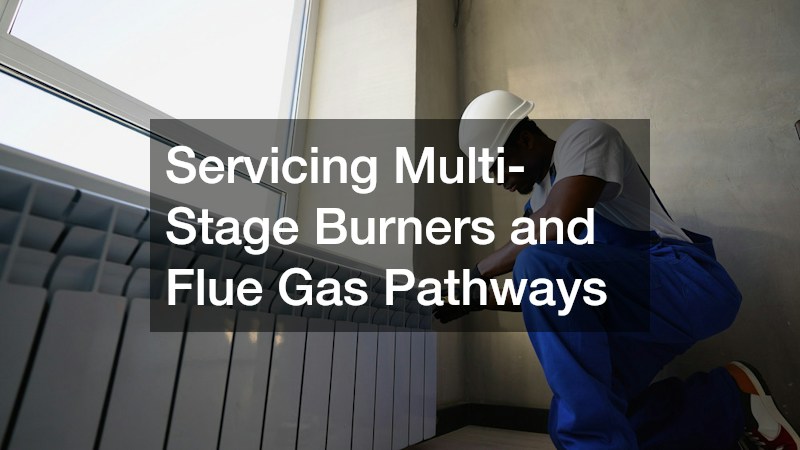
Fuel-burning heating equipment undergoes intense thermal cycles during cold weather. Over several seasons, dust infiltration, carbon buildup, and oxidation degrade burner efficiency and exhaust flow. Incomplete fuel combustion wastes expensive natural gas or heating oil and risks producing dangerous carbon monoxide. Furthermore, micro-corrosion in secondary heat exchangers can lead to critical component failure that requires total equipment replacement.
Restoring clean combustion requires systematic testing and precision adjustment:
- Combustion Flame Analysis: Technicians use electronic gas analyzers inserted into exhaust flues to verify fuel-to-air ratios, flue gas temperatures, and draft pressure. Crisp blue flames signify complete combustion, whereas lazy orange flames indicate dirty burner ports.
- Professional Seasonal Maintenance: Contracting licensed heating companies ensures burners are cleaned, flame sensors are polished, and safety limit switches are tested before winter arrives. Technicians also clear condensate drain traps on high-efficiency condensing units to prevent emergency shutdowns.
- Cleaning Blower Assemblies: Removing settled dust from multi-speed blower wheels restores full airflow over the heat exchanger, preventing high-limit temperature cycling that stresses metal surfaces.
Purging Water Heater Sediment and Clearing Refrigerator Heat Coils
Large household appliances account for a substantial percentage of total domestic electrical and gas consumption. As major appliances run year-round, unaddressed friction and mineral scale buildup silently multiply their daily energy consumption and cut operational lifespans in half.
Targeted mechanical upkeep keeps major household machinery operating within factory efficiency parameters:
- Draining Storage Water Heaters: Municipal water supplies carry dissolved minerals that settle to the bottom of water storage tanks. This calcified sediment creates an insulating layer between burner flames or electric elements and the water, forcing longer heating cycles. Flushing several gallons from the bottom drain valve annually clears sediment and prevents tank corrosion.
- Cleaning Compressor Condenser Coils: Refrigerators run continuous thermodynamic heat-exchange cycles. Vacuuming accumulated pet hair and dust from lower condenser coils reduces compressor runtimes and lowers kitchen electric usage.
- Targeted Mechanical Restoration: Utilizing specialized appliance repair to replace worn water inlet valves, faulty thermostats, or drum rollers restores appliances to original factory performance, eliminating the need to spend thousands on new replacements.
Installing Pressure Regulators and Swapping Vulnerable Flexible Hoses
Residential water infrastructure operates under constant hydraulic pressure. When municipal water mains surge or pressure regulators fail, domestic supply lines experience hydrostatic spikes exceeding eighty pounds per square inch. Excessive water pressure strains copper joints, erodes internal valve seals, accelerates water heater failure, and dramatically increases the risk of burst pipes within finished walls.
Stabilizing household water delivery requires mechanical regulation and robust hardware:
- Monitoring Household Water Pressure: Connecting an inexpensive pressure gauge to an exterior hose spigot quickly measures baseline supply pressure. Readings above seventy-five pounds per square inch indicate a failed or missing pressure regulating valve.
- Professional System Protection: Calling certified plumbing services to install an adjustable pressure reducing valve stabilizes domestic water lines at a safe fifty to sixty pounds per square inch. Technicians can also install automatic whole-home shutoff valves that detect hidden pipe leaks.
- Replacing Aging Flexible Connectors: Swapping old rubber supply lines on washing machines and toilets for braided stainless steel connectors prevents catastrophic water failures that ruin flooring, drywall, and personal belongings.
Correcting Perimeter Slopes and Sealing Settlement Fractures

The structural stability of any residence depends on how well moisture is managed around perimeter footings. Roof runoff flowing from clogged gutters or discharging right next to foundation walls saturates surrounding soil. Saturated soil expands, putting tremendous hydrostatic pressure on basement walls and concrete slabs. Over time, this pressure causes structural settlement, basement wall bowing, and water infiltration.
Remediating drainage and reinforcing masonry preserves the structural core of the home:
- Extending Downspout Terminations: Routing gutter downspouts six to ten feet away from perimeter walls directs roof runoff safely away from structural backfill zones.
- Restoring Ground Slope: Adding clean soil around the foundation perimeter to create a five percent downward slope away from exterior walls ensures surface water drains away naturally rather than pooling against footings.
- Structural Stabilization Interventions: Securing professional foundation repair at the first sight of stair-step masonry cracks or interior wall shearing stops movement before it compromises structural integrity. Specialists use carbon-fiber reinforcement and low-pressure epoxy injections to reinforce compromised walls.
Approaching home maintenance with a strategic mindset turns repair expenses into a wealth-preservation system. Disciplined homeowners recognize that integrity in structure, efficient climate systems, effective plumbing, and structural stability provide financial benefits. Savings on power, heating, and water bills accumulate over time, reducing the stress of unexpected failures. To manage upgrades, establish a home preservation fund, reinvesting savings from lower utility bills into preventative projects. Prioritize exterior sealing and solar deflection for immediate utility reductions, while addressing mechanical systems and water management for property protection. Systematic repairs secure the value of this essential asset.